Deep gum pockets, bleeding that continues after professional cleaning, gum recession, pus, loose teeth, furcation involvement, and bone loss on X-rays can signal that cleaning alone has not controlled periodontitis. You will learn which findings prompt a surgical discussion, how dentists match an operation to the defect, and what recovery and long-term maintenance require.
Key takeaways
- Persistent deep, inflamed pockets after cleaning may justify periodontal surgery.
- Your dentist compares pocket depth, bleeding, bone loss, and treatment response.
- Flap surgery, bone grafting, and gum grafting address different periodontal problems.
- Daily plaque control and maintenance visits help keep surgical results stable.
When cleaning alone has not controlled the disease
A dentist considers periodontal surgery when nonsurgical treatment has been completed but deep gum pockets remain inflamed and difficult to clean. Scaling and root planing, professional debridement, oral-hygiene instruction, and risk-factor control usually come first for newly diagnosed periodontitis.
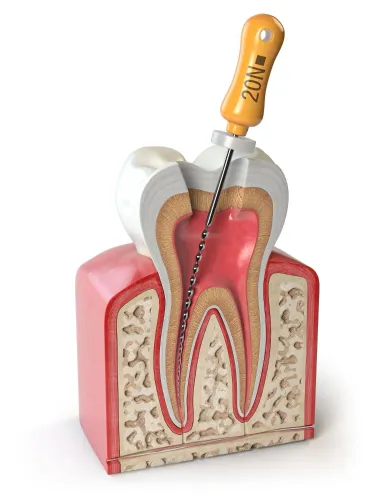
A residual pocket depth of 6 mm or more, especially with bleeding on probing, is a common reason to discuss surgery. Persistent inflammation, pus, gum recession, loose teeth, furcation involvement, or bone loss on dental X-rays strengthens the concern that deposits or damaged tissues remain inaccessible to instruments used during closed cleaning.
Pocket depth alone does not decide the treatment. Your dentist also considers whether bleeding has reduced, how much supporting bone and attachment remain, the tooth’s mobility and anatomy, your bite, and whether you can keep the area clean after treatment. A deep pocket that is stable and maintainable may not need surgery.
Surgery gives the clinician direct access to root surfaces and bone defects that scaling and root planing could not adequately reach. It does not permanently remove periodontitis. Without daily plaque control and professional periodontal maintenance, pockets can become inflamed again, even after successful healing.
How your dentist decides whether surgery is justified
Surgery is justified when disease remains active and the affected anatomy cannot be cleaned or stabilised predictably without access or reconstruction. A dentist reviews periodontal charting, including pocket-depth measurements, bleeding on probing, tooth mobility testing, gum recession measurements, and your ability to keep each site plaque-free.
A residual pocket of 6 mm or more, especially with bleeding, strengthens the case for surgery after scaling and root planing; pocket depth alone does not decide it.
| Finding | What it shows | Why it matters |
|---|---|---|
| Residual deep pocket with bleeding or pus | Ongoing inflammation | Supports surgical access if cleaning has failed |
| Bitewing or periapical radiograph | Remaining bone, vertical defects, or furcation involvement | Shows whether repair or regeneration has a realistic target |
| Mobility, recession, and bite findings | Support, root exposure, and damaging forces | Changes the tooth’s prognosis and the treatment plan |
An advanced diagnosis does not automatically mean surgery. The decision also considers remaining attachment and bone, root shape, restorations, strategic value, bite forces, and whether you can maintain the area.
A loose tooth with usable support may be treated; a tooth with minimal support or a hopeless prognosis may be better removed than subjected to complex surgery.
Smoking reduces healing and regenerative success, so stopping is part of judging whether surgery is worthwhile. Regeneration is most predictable for a contained intrabony defect with favourable walls, not widespread flat horizontal bone loss.
Which periodontal operation addresses which problem
Persistent deep pockets, exposed roots, and bone loss do not all call for the same operation. The target determines the procedure.
| Option | Problem addressed | What the operation does |
|---|---|---|
| Flap surgery or pocket-reduction surgery | Deep pockets where calculus and inflamed tissue remain inaccessible | Lifts the gum to clean root surfaces and reshape bone, then repositions the gum to create an area you can keep clean. It controls pockets; it does not permanently remove periodontitis. |
| Regenerative procedure | A selected, contained intrabony defect with usable bony walls | Places a bone graft, barrier membrane, or both to support new bone and attachment. Regeneration is less predictable with flat horizontal bone loss, tooth mobility, smoking, or poor plaque control. |
| Gum grafting | Gum recession, thin gum tissue, or exposed roots | Adds tissue over or around the recession to reduce sensitivity, protect the root, or improve the gum’s thickness. It does not treat deep periodontal pockets by itself. |
| Furcation treatment | Bone loss where the roots of a molar divide | Treats an area routine instruments cannot fully reach. A selected Class II defect may receive regeneration; extensive destruction may require reshaping, root resection, or extraction if the tooth cannot be maintained. |
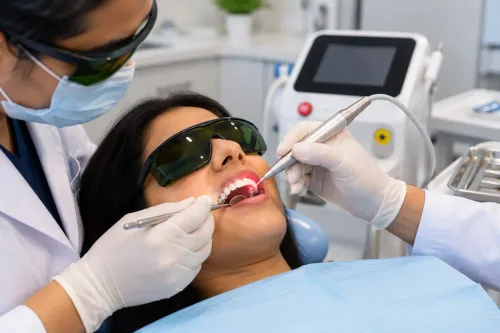
The chosen method must produce cleanable anatomy and thorough biofilm control. A laser is not automatically better than conventional flap surgery, and every option still requires daily cleaning and periodontal maintenance.
What happens before, during, and after the procedure
Local anaesthesia numbs the surgical area, so you should feel pressure and movement rather than sharp pain. The clinician will review your medical history, confirm the treatment site, and explain medicines to take or avoid.
1. The gum is numbed before small gum incisions allow the tissue to be lifted. The clinician cleans deposits from the exposed root surfaces and reshapes the area or places bone graft material or a barrier membrane when regeneration is planned.
2. The gum is repositioned and closed with sutures. Expect mild bleeding on the first day, followed by swelling that often peaks around 48 hours. Apply a cold pack outside the cheek for short intervals during the first day if instructed.
3. Use prescribed pain relief before the anaesthetic fully wears off. Root exposure can cause sensitivity to cold, heat, or touch and can make the tooth look longer; desensitising toothpaste helps many patients.
4. Choose soft, cool foods such as yoghurt, eggs, dal, or mashed vegetables. Avoid hot foods, alcohol, smoking, hard crusts, nuts, and chewing on the treated side while the wound heals.
5. Do not brush directly over the sutures until instructed. Clean the other teeth normally, use any prescribed rinse exactly as directed, and return for suture removal or a healing check, often within one to two weeks.
Later visits assess pocket depth, bleeding, tissue healing, and your home-care technique. Maintenance cleanings remain necessary because surgery improves access; it does not permanently remove periodontitis.
What surgery can achieve—and what keeps the result stable
Surgery can expose and clean root surfaces hidden beneath the gum, reduce pockets that you cannot keep plaque-free, and reshape tissue so daily brushing becomes possible. Selected contained intrabony defects may also gain support through regenerative treatment, but regeneration is less predictable when bone loss is flat and widespread.
Do not expect surgery to rebuild all lost bone or make a severely mobile tooth normal. A tooth’s prognosis depends on remaining attachment and bone, furcation anatomy, root shape, restorative problems, bite forces, mobility, and whether you can clean around it. A hopeless tooth may be safer to remove than to subject to complex surgery.
The long-term result depends on factors you can influence:
- Stop smoking; smoking cessation improves healing and reduces the risk of further progression and tooth loss.
- Keep diabetes under control, because poor diabetes control impairs healing and increases periodontal risk.
- Remove plaque carefully from every maintainable surface, following the brushing and interdental-cleaning method your clinician demonstrates.
- Attend supportive periodontal care, often every 3 to 6 months for higher-risk patients, so bleeding, pocket depth, plaque, and new breakdown are found early.
At Dental Junction, ask how the proposed procedure changes your tooth prognosis, which areas remain difficult to clean, and what maintenance interval the measured risks require. Laser treatment is not automatically better than conventional surgery; the useful test is whether the chosen method controls deposits and leaves anatomy you can maintain.
Related service
Wisdom Tooth Removal Wisdom tooth removal is a common dental procedure to remove the third molars that may cause pain, swelling, or infection due to lack of space in the... View service → |
Frequently asked questions
When is periodontal surgery considered after nonsurgical treatment?
Surgery is considered when scaling and root planing, professional debridement, oral-hygiene instruction, and risk-factor control have not controlled inflammation or left deep pockets that are difficult to clean.
How does a dentist decide whether periodontal surgery is justified?
The decision uses periodontal pocket measurements, bleeding, gum recession, tooth mobility, X-rays showing bone loss, and your response to nonsurgical treatment.
Which periodontal operation addresses each problem?
Flap surgery helps access deep pockets for cleaning; bone grafting addresses certain bone defects; and gum grafting treats exposed roots or insufficient gum tissue.
What helps keep periodontal surgery results stable?
Effective daily plaque removal, professional periodontal maintenance, follow-up appointments, smoking cessation, and control of conditions that affect healing help maintain the result.